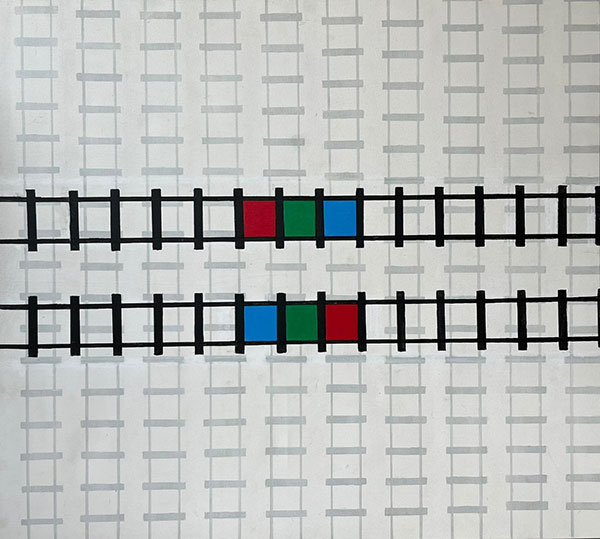
LAWS OF PHYSICS
(The Rails of Physics)
Just as it is unknown where and how they exist, it is also unknown where exactly in the universe they currently are.
The Laws of Physics are the most abstract element of the universe. As is known, space-time—that is, the universe—began with the laws of physics. Therefore, including the quantum world, all phenomena in nature are outcomes that occur only as regulated and controlled by these laws. In this sense, none of the events defined or perceived as random or uncertain are beyond the reach of these laws. Since the Big Bang, every event has taken place within the boundaries permitted by the relevant laws. Yet, where, how, or even why these laws themselves exist remains unknown.
The real issue is that we do not know where in the existing universe these laws—the rails of physics—are located. And yet, things like the laws of physics, which have structuring and ordering qualities, should—one would think—preserve, in some form we cannot grasp, their own intrinsic information, shouldn’t they? However, the problem is that, according to science, the laws of physics (the laws of nature) are independent of objects—that is, of the universe itself. Consequently, these laws, which have initiated and sustained all existence for roughly fourteen billion years, have no identifiable location within the universe from which they operate. In the end, not only is there no explanation for how the laws of nature came to exist, there is also no knowledge of where their existence is preserved.
To put it plainly: the laws of physics—the rails of physics—are responsible for everything that happens in the universe; they are active within everything, yet nothing is within them. For they are not part of this universe, and thus nothing can be inside them either. Since something without an object can neither contain nor be contained, I called them the most abstract concept of the universe.
Bu yazının Türkçe çevirisine buradan ulaşabilirsiniz.